Natural Sciences
Ecology, climate and physical systems. Methods include field measurement, sampling, data analysis and comparison across sites. Students record uncertainty and relate findings to local research questions.
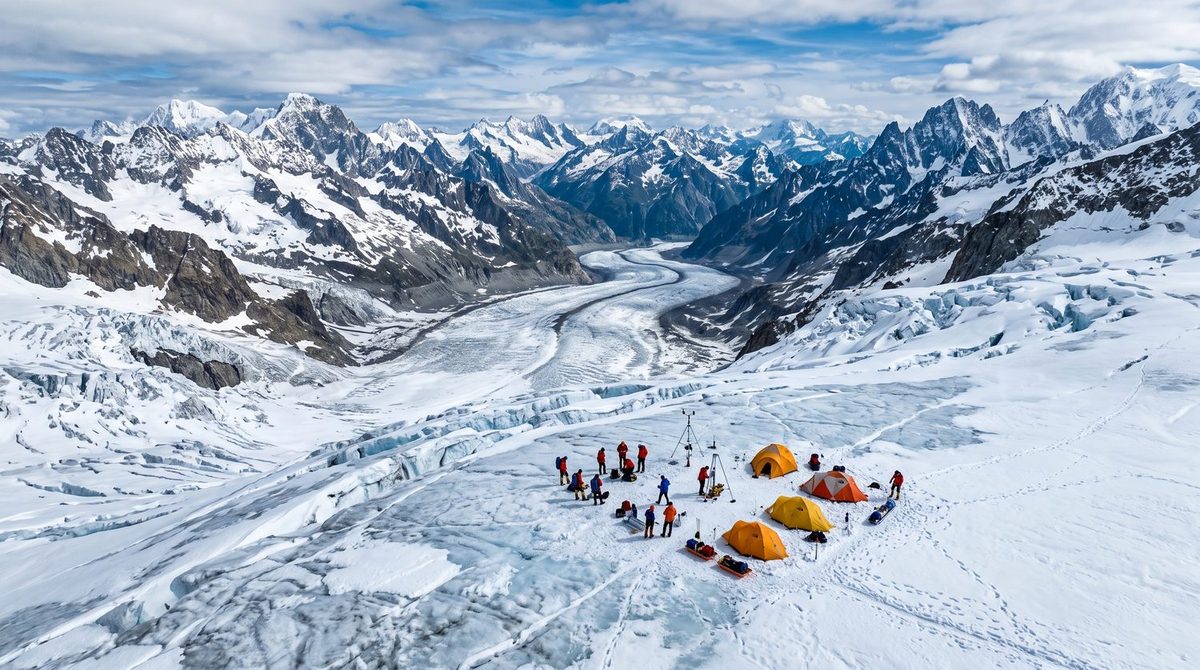
The Core brings together natural sciences, human sciences and epistemology to help students interpret and investigate their experiences in the field. Teaching in the core includes seminars, readings, field research, discussion and written work. Students complete summative assessments and a supervised independent project. Both teaching and student research involve local researchers, practitioners and host communities.
Each strand has an associated record maintained across the 24 blocks.
Ecology, climate and physical systems. Methods include field measurement, sampling, data analysis and comparison across sites. Students record uncertainty and relate findings to local research questions.
Example from Term 3, Kyoto
In the Sakura block, students keep consistent records of flowering and seasonal change, then compare them with Japan’s 1,200-year cherry-blossom record. They apply phenology methods introduced in Canada and examine differences in place, timescale and method before interpreting a pattern.
The analysis records the question, sampling design, observations, uncertainty and limitations. It contributes to the continuing study of how living systems and communities absorb, adapt to and transform under change, and how resilience is defined and distributed.
The same record covers Canadian forest and marine ecology; Himalayan hydrology and glaciology; Japanese snow and volcanoes; African desert, wetland and savannah ecology; Andean altitude physiology and glaciers; and the Alaskan cryosphere. Research partners help set questions, protocols and arrangements for returning observations.
Development economics, resources, governance, history and anthropology. Sources include economic data, historical records and interviews with residents, practitioners and affected communities.
Philosophy of science, interpretation, research ethics and knowledge systems. Topics include evidence, consent, attribution, authority and the application of concepts in different contexts.
Assigned reading, fieldwork, seminars, retrieval quizzes, individual writing and feedback. Debriefs and block syntheses include review of earlier concepts and evidence.
Students complete a supervised independent project. Work with research and community partners includes agreed questions, consent, data-use arrangements, attribution and the return of findings.
Topics, cognitive moves, research connections and assessment for each term.
Term 1 · Canada
Field observation, measurement and research ethics in forest, marine and subarctic settings. Topics include ecology, Indigenous governance and the evaluation of evidence.
Term 2 · Nepal & India
Comparative study of Canadian and Himalayan water governance, climate resilience and development. Methods include field observations, interviews and policy analysis.
Term 3 · Japan
Japanese philosophy, environmental writing, systems analysis and design. Students examine resilience, technological change and different forms of evidence.
Term 4 · Namibia, Botswana & Tanzania
Comparative study of conservancies, wetlands and coastal conservation. Ecological data, governance research and community accounts are compared with earlier cases, including Nepal’s community forests.
Term 5 · Chile & Argentina
Research on extraction, development and the green transition in Chile and Argentina. The term paper requires an original argument supported by evidence from at least four terms.
Term 6 · Alaska, USA
Public defense of the capstone and Portfolio. Completion of the comparative cryosphere study and handover of records to the incoming cohort.
Twenty-three core texts, with scientific papers, primary sources and shorter readings.
| Text / author | Reading | Location, block |
|---|---|---|
| Braiding Sweetgrass | Term 1 | Vancouver Island & BC coast, Blocks 1–3 |
| The Golden Spruce | Term 1 | Vancouver Island, Vancouver & Yukon, Blocks 1–5 |
| Decolonizing Methodologies | Terms 1–2 · Guided excerpts | Nootka, Block 2; Khumbu, Block 7 |
| Principles of Tsawalk | Term 1 · Guided selection | Vancouver Island & Nootka, Blocks 1–2; revisited Vancouver, Block 4 |
| Seeing Like a State | Term 1 excerpt; Term 2 full text | Vancouver, Block 4; Khumbu, Blocks 7–8 |
| Development as Freedom | Term 2 | Khumbu, Chitwan & Mumbai, Blocks 7–10 |
| In Praise of Shadows | Term 3 | Hokkaido, Block 11; Tokyo & Kyoto, Block 12 |
| The Mushroom at the End of the World | Term 3 | Hokkaido to Ogasawara, Blocks 11–14 |
| Paradise in the Sea of SorrowTranslated by Livia Monnet | Term 3 · Guided selection | Hokkaido, Tokyo & Ogasawara, Blocks 11, 12 & 14 |
| Why Trust Science? | Term 3 | Tokyo, Kyoto, Kumano Kodo & Ogasawara, Blocks 12–14 |
| The Sixth Extinction | Before Term 4; finish in Block 16 | Home break; Namibia, Block 15; Okavango, Block 16 |
| When Rain Clouds Gather | Before Term 4; seminar in Block 16 | Home break; Okavango Delta, Block 16 |
| Governing the Commons | Term 4 · Guided excerpts | Okavango Delta, Block 16 |
| The Serengeti Rules | Term 4 | Ngorongoro & Serengeti, Block 17 |
| Paradise | Term 4 · Transit reading; Zanzibar seminar | Maun–Tanzania transit, Blocks 16–17; Zanzibar, Block 17 |
| Dead Aid | After Term 4 | Home break after Term 4 |
| Unbowed | After Term 4 | Home break after Term 4 |
| The Invention of Nature | Term 5 | Santiago, Atacama & Mendoza, Blocks 18–20 |
| Under a White Sky | Term 5 | Puna de Atacama, Block 19 |
| The Twilight ZoneTranslated by Natasha Wimmer | Before Term 5; seminar in Block 18 | Home break; Santiago & Valparaíso, Block 18 |
| Neo-extractivism in Latin America | Term 5; revisit in Block 22 | Puna de Atacama & Mendoza, Blocks 19–20 & 22 |
| Open Veins of Latin America | Term 5 · Curated excerpts | Santiago & Valparaíso, Block 18 |
| Arctic Dreams | Term 6 | Denali, Block 23 |
| Text / author | Reading | Location, block |
|---|---|---|
| The Purple Violet of Oshaantu | Recommended · Term 4 | Namibia; optional reading |
| Cry of the Kalahari | Recommended · Term 4 | Namibia / Kalahari; optional reading |
| The Sixth Extinction | Recommended · Term 4 | Namibia, Botswana & Tanzania; optional reading |
| The Weave of My LifeTranslated by Maya Pandit | Recommended · Term 2 | Mumbai; optional reading |
| Reading / source | Location, block |
|---|---|
| Nuu-chah-nulth and Coast Salish oral histories (curated) | Vancouver Island, Block 1 |
| Ngũgĩ wa Thiong’o, Decolonising the Mind (one chapter) | Nootka, Block 2; second reading on the home break after Term 4 |
| Binyavanga Wainaina, ‘How to Write About Africa’ (essay) | Nootka, Block 2; re-read in Blocks 15 and 17 |
| First Nations Information Governance Centre, OCAP® principles | Nootka, Block 2 |
| A short wolf-ecology paper (curated) | Nootka, Block 2 |
| Ailton Krenak, Ideas to Postpone the End of the World (selected pages) (translated by anthony doyle) | Desolation Sound, Block 3; revisited Terms 2 and 5 |
| Marine-conservation papers (curated) | Desolation Sound, Block 3 |
| Citizen-science ethics case studies | Desolation Sound, Block 3 |
| Jorge Luis Borges, ‘On Exactitude in Science’ | Vancouver, Block 4; revisited in Block 22 |
| Vancouver reconciliation case studies | Vancouver, Block 4 |
| Yukon Umbrella Final Agreement — a primer | North Yukon, Block 5 |
| Northern Indigenous climate-adaptation readings (curated) | North Yukon, Block 5 |
| IPCC, IPCC Arctic chapter (curated) | North Yukon, Block 5 |
| Manjushree Thapa, Forget Kathmandu (selections) | Khumbu, Block 7 |
| Dipak Gyawali, ‘How to energise women: the Nepali response’ (Bulletin of the Atomic Scientists, 2014) | Khumbu, Block 7 |
| Ed Douglas, Himalaya (excerpts) | Everest Three Passes, Block 8 |
| Jemima Diki Sherpa, ‘Three Springs’ (essay) | Khumbu, Block 8; revisited after the trek |
| Ramachandra Guha, ‘Radical American Environmentalism and Wilderness Preservation: A Third World Critique’ (essay) | Chitwan & the Western Ghats, Block 9 |
| Madhav Gadgil, A Walk Up the Hill (chapters 5 and 16) | Western Ghats, Block 9 |
| Bina Agarwal, ‘Participatory Exclusions, Community Forestry, and Gender’ (World Development, 2001) | Chitwan & the Western Ghats, Block 9; revisited in Block 16 |
| Kate Raworth, Doughnut Economics (selected sections) | Kathmandu & Mumbai, Block 10 |
| C. M. Biswakarma, ‘Remembrance’ (poem, from The Country Is Yours) (translated by manjushree thapa) | Kathmandu, Block 10 |
| Chiri Yukie, Ainu Shin’yōshū (selected narratives, in Ainu Spirits Singing) (translated by sarah m. strong) | Hokkaido, Block 11 |
| Matsuo Bashō, Haiku and travel sketches (curated) | Kumano Kodo, Block 13 |
| Aono & Kazui, Kyoto cherry-flowering phenology (paper, 2008) | Kumano Kodo & Kyoto, Block 13 |
| David Quammen, The Song of the Dodo (excerpts, with Darwin) | Ogasawara, Block 14 |
| Louis Liebenberg, The Art of Tracking (excerpts) | Namibia, Block 15 |
| Garth Owen-Smith, An Arid Eden (excerpts) | Damaraland, Block 15 |
| NACSO, The State of Community Conservation in Namibia (selected pages) | Namibia, Block 15 |
| Binyavanga Wainaina, ‘How to Write About Africa’ (re-read) | Namibia and Tanzania, Blocks 15 and 17 |
| Piers Blaikie, ‘Is Small Really Beautiful? Community-based Natural Resource Management in Malawi and Botswana’ (World Development, 2006) | Okavango Delta, Block 16 |
| Joseph E. Mbaiwa, ‘Enclave tourism and its socio-economic impacts in the Okavango Delta, Botswana’ (paper, 2005) | Okavango Delta, Block 16 |
| Bina Agarwal, ‘Participatory Exclusions, Community Forestry, and Gender’ (revisited) | Okavango Delta, Block 16 |
| Julius K. Nyerere, ‘Ujamaa — The Basis of African Socialism’ and ‘Education for Self-Reliance’ (essays) | Zanzibar, Block 17 |
| Julius K. Nyerere, The ‘candle on Kilimanjaro’ address (1959, excerpt) | Moshi, Block 17 |
| Ernest Hemingway, ‘The Snows of Kilimanjaro’ | Moshi, Block 17 |
| Rosemarie Nyigulila Mwaipopo, ‘The Social Dimensions of Marine Protected Areas: Mafia Island Marine Park’ (ICSF) | Zanzibar & Pemba, Block 17 |
| Thompson et al., Kilimanjaro ice-core papers (curated) | Moshi, Block 17 |
| Chinua Achebe, ‘An Image of Africa’ (essay) | At home, after Term 4 |
| Ngũgĩ wa Thiong’o, Decolonising the Mind (one chapter, second reading) | At home, after Term 4 |
| Elicura Chihuailaf, Message to Chileans (selections) | Santiago & Valparaíso, Block 18 |
| Cubillos, Aguilar, Grágeda & Dorador, Salar de Atacama microbial communities (paper, 2018) | Puna de Atacama, Block 19 |
| Sonia Ramos, ‘Energy transition, community fragmentation and territorial justice’ (interview, IIED, 2024) | San Pedro de Atacama, Block 19 |
| Lithium dossier (curated: industry, community and agency sources) | Puna de Atacama, Block 19 |
| San Martín campaign sources (curated) | Mendoza, Block 20 |
| Jorge Luis Borges, ‘On Exactitude in Science’ (revisited) | Mendoza, Block 22 |
| Velma Wallis, Two Old Women | Alaska, Block 23; finished before the expedition |
Core texts are studied in full or through guided selections, as scheduled. Across the reading list, students compare accounts, distinguish literary interpretation from empirical claims, and evaluate arguments against appropriate evidence. Published translations are credited.
The schedule includes the twenty-three core texts and shorter block readings. The teaching plan specifies editions, extracts and pre-term assignments. Fewer new readings are assigned during expedition and synthesis periods.
| Block | Reading and source packet |
|---|---|
| 01 Orientation |
|
| 02 Research Intro |
|
| 03 Ocean Intro |
|
| 04 Urban Intro |
|
| 05 Arctic Leadership Lab |
|
| 06 Solo & Synthesis |
|
| Block | Reading and source packet |
|---|---|
| 07 Himalayan Communities |
|
| 08 Himalayan Trek |
|
| 09 Conservation Seminar |
|
| 10 Mumbai |
|
| Block | Reading and source packet |
|---|---|
| 11 Resilience Season |
|
| 12 Harmony: Nature, Culture & Hyper-modernity |
|
| 13 Sakura |
|
| 14 Ocean Intensive |
|
| Block | Reading and source packet |
|---|---|
| 15 Desert Crucible |
|
| 16 Wetland Oasis |
|
| 17 Savannah to Ocean Odyssey — via Kilimanjaro |
|
| Block | Reading and source packet |
|---|---|
| 18 Foundations: Identity, History & Orientation (Chile) |
|
| 19 High-Altitude Puna 4x4 Overlanding + Optional Ojos Summit |
|
| 20 Aconcagua Approach |
|
| 21 Aconcagua Expedition & Summit Objective |
|
| 22 Post-Expedition Synthesis & Capstone |
|
| Block | Reading and source packet |
|---|---|
| 23 Alaska Exploration & Mt Denali Expedition |
|
| 24 Graduation & Transference |
|