Himalayan Communities
Development economics · Water Governance & Hydropower · Earthquake resilience · Remote medicine · Aid vs Trade
Sherpa teachers, mountain guides and hosts introduce the Khumbu’s land, history and livelihoods while students acclimatise for the Three Passes trek. Field lessons and site visits examine hydropower, seismic risk, tourism, agriculture and climate adaptation alongside development economics, aid and trade. Community lodges and homestays provide accommodation, with household routines and guest responsibilities introduced by hosts. Research interviews are arranged separately from teaching and hosting. The block also begins the remote-medicine training completed through WFR certification in Block 9.
- What does resilience look like for Himalayan communities facing climate, seismic and economic disruptions, and when do external actors support or constrain local agency?
- How do hydropower, tourism and international aid reshape power, livelihoods and self-determination in the Khumbu?
- How do Sherpa teachers explain Buddhist ideas of impermanence and interdependence, and how do these inform responses to risk and change?
- What responsibilities do I have as a guest and learner in a place that is also a major tourism destination?
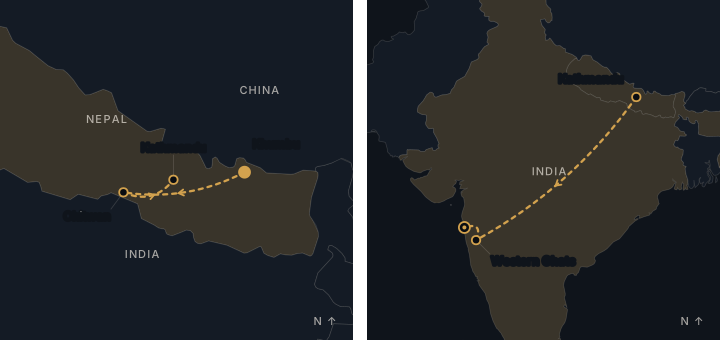
- Field teaching in the high Himalayan Khumbu: trekking between villages, community-lodge and homestay accommodation, and lessons on Tibetan-influenced Buddhist traditions, trans-Himalayan trade and mountain agriculture.
- Progressive acclimatisation and mountain living: altitude physiology, pacing and load management, with guides and hosts explaining local travel and accommodation routines.
- Development-economics field visits: practitioners teach about hydropower, water governance, post-2015 earthquake reconstruction, tourism and the roles of aid and trade.
- Remote-medicine foundations: recognition and management of altitude and cold injuries, expedition health, and the beginnings of WFR-level scenario training.
- Homestays and language practice: hosts introduce household routines, food and guest protocols; scheduled lessons examine local history, religious practice and land stewardship.
- Core inquiry: How are Himalayan communities navigating the intersecting pressures of climate change, seismic risk, hydropower development, tourism and shifting aid/trade dynamics — and what hybrid models of resilience and self-determination are emerging?
- Comparative development analysis: hydropower, water governance and aid-and-trade case studies based on field lessons, site visits, public records and separately agreed research interviews.
- Seismic and climate resilience: earthquake preparedness and recovery, glacial and snowpack change, and community adaptation strategies.
- Epistemology: Sherpa teachers’ accounts of resilience and Buddhist impermanence alongside development economics and hazard science; how expertise informs mountain development.
- Extended Project integration: students with Himalaya-linked questions collect field observations and conduct separately agreed research interviews under supervision.
- Acclimatise safely and recognise/respond to altitude illness (AMS/HACE/HAPE) as both a physiological skill and a leadership responsibility (Grit, Judgement).
- Learn from Sherpa teachers, follow host-household protocols and conduct agreed interviews with attention to consent, interpretation, language and power (Awareness, Judgement, Impact).
- Analyse how hydropower, tourism, seismic risk and aid/trade dynamics shape Himalayan resilience and self-determination (Rigor, Impact).
- Begin wilderness/remote-medicine competence toward WFR certification (Grit, Judgement).
- Produce a comparative development narrative that attributes its sources, distinguishes contributors’ explanations from student interpretation, and supports its conclusions with evidence (Impact, Awareness).
Natural sciences. High-mountain hydrology & glaciology; GLOF risk; seismicity and earthquake resilience.
Human sciences. Development economics I: hydropower, water governance, aid vs trade; remote-medicine systems. Energy access, women’s everyday work and institutional accountability (Gyawali).
Epistemology. Researcher assumptions, the design of participatory research, and different definitions of resilience.
Field Ledger. Glacier observation set #2 — the first formal Yukon–Khumbu comparison in the Ledger.
Resource Atlas. Hydropower & aid flows — Atlas case; who owns the river. Gyawali read with Sen and Scott on benefits, access and decision-making — distribution as well as aggregate provision where the case material supports it.
Ways of Knowing Journal. Compare definitions of resilience in development accounts and the evidence used to support them.
- High-altitude trekking and expedition leadership: route planning, altitude-illness recognition and response, load and pace management, and cultural navigation in remote Nepali communities.
- Remote/wilderness medicine (toward WFR): patient assessment, altitude and environmental injury, evacuation decision-making.
- Cross-language fieldwork: interpreter-mediated interviewing, accurate attribution, homestay etiquette and the agreed terms for participation, recording and use.
- Development-analysis skills: stakeholder mapping, political-economy analysis, and comparative case study.
- Cross-cultural resilience: managing culture shock, dietary and hygiene adaptation, and homesickness in a first sustained international immersion.
| Days 1–3 Arrival & Acclimatise | Altitude, culture entry | Kathmandu entry and transit to Khumbu; staged ascent with acclimatisation protocol; homestay orientation and protocol briefing; altitude-illness education. |
| Days 4–9 Field Teaching + Inquiry | Field lessons, homestays, interviews, WFR base | Practitioner-led lessons and site visits on hydropower, tourism and aid; separately agreed interpreter-mediated interviews; homestay accommodation; WFR-foundation scenario training; acclimatisation day-hikes. |
| Days 10–14 Synthesis + Story | Development narrative + reflection | Comparative development analysis; produce a narrative drawing on field teaching, readings and agreed research contributions; reflect on assumptions and guest responsibilities; prepare for the Three Passes trek. |
Primary (recommended). Comparative development narrative — written policy brief or 5–7 min film — on Himalayan water governance, hydropower, earthquake resilience, aid and trade. Draw on field teaching, documents and separately agreed interviews, explaining how decisions, costs and benefits are distributed.
Alternatives (from menu). An oral-history recording through a separately agreed project with a contributor; a photo essay on high-altitude land use and climate adaptation, with agreed photography arrangements.
Narrative-craft guidance. How do Sherpa practitioners explain resilience and the effects of outside institutions? Attribute accounts, represent disagreements, and show how the evidence supports the argument.
Competencies emphasised. Accurate interpretation and attribution across languages (Judgement, Awareness); development-economics analysis through narrative (Rigor, Impact); communication and fulfillment of agreed guest and research responsibilities (Impact).
Integration w/ Exploration & Research. Brings field teaching, hydropower and aid research into a comparative development narrative; feeds Himalaya-focused Extended Projects.
Individually-accountable output. Extended Project international primary data (interviews/observation); individual altitude-and-culture reflection log.
Team output. Comparative development analysis and narrative, with sources and contributor roles documented.
Storytelling deliverable. Development brief/film on Craft axis; development analysis on Substance axis.
Primary competencies evidenced. Awareness, Judgement and Grit foregrounded; Rigor and Impact supporting.
Substance vs Craft. Development analysis counts as Substance, narrative craft as Craft; the two are scored independently.
Moderation. Calibrate cross-cultural storytelling against Storytelling Rubric anchors; double-mark development analysis.
Students select development cases and research questions within a shared inquiry on Himalayan resilience. Field lessons, documents and separately agreed interpreter-mediated interviews support policy analysis and supervised Extended Project evidence.
Stakeholder mapping and development cases include numerical evidence on hydropower, tourism and aid flows. Field lessons and research interviews provide explanations to compare with those records.
Notes from practitioner-led lessons and site visits are combined with separately arranged, interpreter-mediated interviews on defined research questions. Records identify consent, sources and the distinction between contributors’ explanations and students’ interpretations.
Remote-medicine foundations cover patient assessment, altitude and environmental injury and evacuation decisions. Students practice acclimatisation routines and interpreter-mediated interviewing in preparation for the trek and conservation block.
A comparative development narrative as a policy brief or five-to-seven minute film, with an agreed oral-history project or photo essay as alternatives; craft is assessed separately from analysis.
Sherpa teachers’ explanations of resilience and Buddhist thought are considered alongside development economics and hazard science. Students examine how expertise is valued and reflect on their assumptions and guest responsibilities.
Sherpa hosts introduce household and Buddhist protocols, with interpreter support for conversation and language practice. Scheduled teaching sessions explain local histories, land use and livelihoods during the homestay and acclimatisation phase.
Sherpa teachers, guides, interpreters and hosts teach and host in scheduled roles across the fortnight.
Students coordinate interview and case-study work, share records and prepare development narratives. Expedition interdependence is limited in this block, but the research and presentation tasks require collaboration.
Altitude-illness recognition and response is framed as a leadership duty, and students manage group pace and health monitoring inside faculty-led trekking and homestay days.
Route, lodging, interpreters and the daily schedule are faculty-set; students choose interview focus and reflection within the acclimatisation protocol and arranged homestay placements.
Students manage personal preparation, acclimatisation and health reporting, homestay conduct, consent procedures and assigned research work within the guided program.
Trekking between Khumbu villages over two weeks with staged ascent and acclimatisation day-hikes, at moderate daily distance, emphasising pacing and load management rather than sustained loaded travel.
Progressive ascent to Khumbu village altitudes in October cold and thin air, with strong mountain sun and the dietary and hygiene adaptation of high-altitude living.
Community lodges and homestays in the Khumbu run on micro-hydro and solar with no mains supply, though cooking, water and waste are managed by host households.
No marine or coastal work. Rivers appear as hydropower and water-supply governance — political economy rather than the study of a water system.
No solos, sit-spots or silent practice are scheduled; students live in homestays, lodges and trekking groups, with reflection logs written inside shared accommodation.
Trekking between villages, homestay living, and micro-hydro and post-earthquake site visits, with teaching delivered inside the communities and economies it describes.
Altitude physiology, glacial and snowpack change, seismicity after the 2015 earthquake, and mountain hydrology and agriculture across the Khumbu, taught in the places where they occur.
Water governance and micro-hydro, glacial and snowpack change, and mountain agriculture studied alongside low-consumption lodge living and the food systems of high-altitude households.
Trans-Himalayan trade history, Buddhist traditions in the Khumbu, as taught by Sherpa teachers, and the governance of water and tourism, studied through stakeholder mapping, interpreter-mediated interviewing and comparative case study.
Aid versus trade, whose expertise counts in mountain development, tourism benefit distribution and community self-determination, with positionality and outsider dynamics examined as part of fieldwork ethics.
Hydropower economics and water governance, tourism economies, and aid and development finance in the Khumbu, analysed through stakeholder mapping and political-economy case studies.
Sherpa teachers introduce Buddhist protocol and explain ideas of resilience, impermanence and interdependence. Students follow the protocols at household and religious sites and compare these teachings with development and hazard science.