Home The Pelion Curriculum Admissions About Founding Circle FAQ Contact
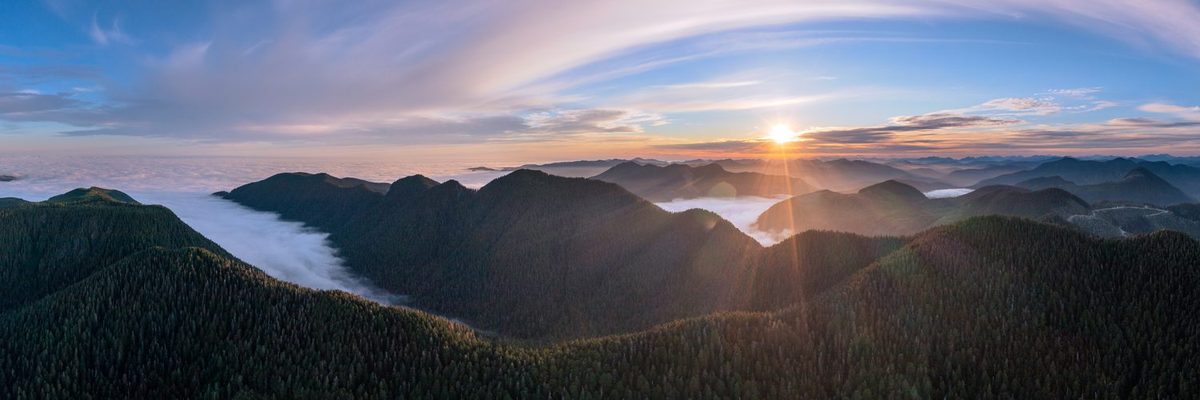
Forested ridgelines above a sea of cloud at dawn.

Canada

Ancient forests, coastal waters and northern landscapes, from Vancouver Island to the Yukon. Conservation practitioners and community teachers lead lessons on ecology, history, governance and their approaches to land stewardship. Students learn research design through wildlife surveys, marine sampling, interviews, and permafrost and riverbank observations, comparing their records with published glacier data. Field reports, policy briefs and documentary work establish the research portfolio, and each student begins an independent project that continues across two years.

Term 1
11 weeks · June – August 2028
Orientation — Vancouver Island
Off-grid living among old-growth cedar and Sitka spruce introduces forest ecology, Indigenous governance and the question of what counts as knowledge. Students study succession, biodiversity and the salmon–forest nutrient cycle, begin field journals and ecological inventories, and read Robin Wall Kimmerer’s Braiding Sweetgrass alongside field observation.

Invited Coast Salish and Nuu-chah-nulth teachers introduce local histories, oral traditions and protocols for learning on their territories. Students follow the teachers’ guidance on participation and the use of shared knowledge. Shelter, fire, water and camp responsibilities establish routines for living together; a first photo essay connects close observation with reflection on the student’s assumptions.
Research Intro — Nootka
Wolf tracking on Vancouver Island’s west coast introduces scientific inquiry: forming a testable question, choosing a sampling method, distinguishing observation from inference and reporting uncertainty. Students use transects, camera traps, acoustic surveys and mapping to conduct a pilot study and present findings with explicit limitations.

Coastal conservation practitioners teach the methods and frame the research brief around their monitoring work. Nuu-chah-nulth teachers lead lessons on local research protocols and approaches to conservation. The study follows agreed data-access, use and reporting terms, and students examine First Nations principles of data ownership and control. A research report and personal ethics statement establish the working standards for later projects. Each student also begins an independent project with taught research skills and a supervisor.
Ocean Intensive — Desolation Sound
A multi-day sea-kayak expedition through fjords and islands combines navigation, rescue skills and coastal camp life with oceanography and marine ecology. Plankton tows, intertidal transects, water sampling and marine-mammal observations support small field studies of biodiversity, vessel disturbance and coastal habitats.

Marine-stewardship practitioners teach survey methods and explain local conservation questions; Coast Salish teachers lead lessons on coastal history, resource use and stewardship. Seminars connect these lessons with fisheries, tourism and the governance of shared waters. Students analyse their data and submit the agreed monitoring records and study to the conservation partner. A documentary explains findings, sources and the limits of a short investigation.
Vancouver
Vancouver brings resource economics, housing, technology and climate policy into the same inquiry. Students map flows of land, capital, energy and resources, then investigate a specific tension through public data, planning documents, agreed interviews and guided site visits. Timber, salmon and the port become urban cases in the cumulative Resource Atlas.

Local guides and organisers teach neighborhood history and policy, alongside professional visits to planners, economists, entrepreneurs and First Nations development organisations. Scheduled discussions with local peers compare experiences of employment, housing and services. A neighborhood partner helps frame the inquiry and leads a review of students’ interpretations. The policy brief connects evidence with practical recommendations, recognises competing interests and explains whose perspectives remain missing.
Arctic Leadership Lab — North Yukon
The North Yukon field phase combines four canoe days on the Porcupine River with three walking and monitoring days near Old Crow. Students record permafrost, riverbank change and wildlife at fixed teaching sites, then compare their observations with published Yukon glacier and climate records. These methods begin the cryosphere study revisited in later terms.

Vuntut Gwitchin and Tr'ondëk Hwëch'in practitioners lead lessons on self-government, food security, land stewardship and climate adaptation. Teaching and research contributions have distinct roles and agreed terms for data use and reporting. A political-ecology analysis compares the evidence and explanations informing northern decisions. Cold-weather living, rotating leadership, remote travel and daily individual reflection support the practical and personal work of the expedition.
Transference & Solo
The term closes with a student-designed solo or small-team expedition lasting three to seven days, with structured reflection and agreed supervision and safety arrangements. Preparation requires route design, risk assessment and logistical planning. Sit-spots and solo components provide time to consider the term’s lessons, remaining questions and responsibilities.

Students then synthesise ecological records, governance cases, readings and research into an evidence-based account of their learning. They identify assumptions to revisit and prepare literature reviews and research plans for Nepal and India. They also review agreed reporting and data-use commitments from earlier projects and complete outstanding follow-up. A letter to their future self records intentions for the next stage.
Assessment in Term 1
Weekly retrieval quizzes, individual syntheses, field reports and a policy brief build towards “Ways of Knowing a Forest”: a 2,000-word essay and a 15-minute oral examination. Students explain their evidence and reasoning, including how scientific methods and what First Nations teachers taught have informed or challenged their conclusions. Research quality and storytelling craft are assessed separately. Records document attribution, consent and fulfillment of the participation and reporting agreements used in each project.
Canada · the four categories
Methods & skills
ResearchQuantitativeenquiryQualitativeenquiryApplication &practiceCreativeexpressionWays ofknowing
Research4 / 5

Baseline biodiversity and human-use surveys, the field-methods bootcamp, and the Extended Project launch on roughly thirty taught hours and pilot micro-projects. The micro-projects are scaffolded and direction still comes from faculty.

Quantitative enquiry5 / 5

Transects, camera traps, GIS, sampling design, plankton tows, intertidal quadrats, water quality and marine acoustics are followed by permafrost and riverbank measurements and analysis of published Yukon glacier records.

Qualitative enquiry4 / 5

Oral-history teaching, separately agreed recording projects, semi-structured and informational interviews, and reflection on researcher assumptions across the forest, coastal, urban and northern studies.

Application & practice4 / 5

Students learn and apply kayak handling and rescue, shelter, fire, bear-aware camping, tracking, transects and camera-trap methods. Blocks 1–5 provide instruction and repeated practice; Block 6 applies these skills on a student-designed route.

Creative expression4 / 5

A photo essay with a consent and reciprocity note, documentary-method teaching, rainforest soundscapes and facilitated story-circle projects with agreed contributor roles, attribution and use.

Ways of knowing4 / 5

Seminars compare observations, scientific methods, oral traditions and governance accounts. Students study researcher assumptions and OCAP® principles, keep sit-spot and field journals, and assess which interpretations changed or remained consistent across the term.

Relationships
CulturalfluencyCommunityengagementTeamworkLeadershipStudentautonomyPersonalresponsibility
Cultural fluency3 / 5

Invited First Nations teachers, neighborhood guides and northern practitioners explain local histories, governance and stewardship. Students prepare for teaching and visit protocols and reflect on their conduct as guests alongside the camp and research program.

Community engagement3 / 5

Invited conservation practitioners and Vancouver organisations teach with defined briefs: a neighborhood partner frames and receives the policy brief, and Yukon monitoring returns data to its holders.

Teamwork4 / 5

The expedition team is built in the first fortnight — expedition behavior, cook rotas, debrief circles, peer-leadership rotations — then worked in rotating roles at sea and in small-team living in the Yukon. The solo block steps out of it by design.

Leadership4 / 5

Students rotate kayak-expedition and camp roles and undertake the Arctic Leadership Lab. Planning, communication, decision logs and peer review provide evidence of how they coordinate and support others.

Student autonomy3 / 5

Five of six blocks run to a set program at a front-loaded instructor ratio. The solo is student-designed.

Personal responsibility4 / 5

Students are responsible for equipment, records, camp duties, conduct and deadlines as supervision develops across the term. The final self-planned route adds preparation and check-in obligations within staff safety arrangements.

Experience
PhysicalexertionEnvironmentalexposureOff-gridlivingWaterSolitudeExploration
Physical exertion3 / 5

Multi-day sea kayaking, northern field travel, camp duties and self-planned wilderness routes provide repeated physical work across eleven weeks. The urban and synthesis phases have lower physical demands.

Environmental exposure3 / 5

Constant wet — temperate rainforest and a coastal expedition — with cold water on the kayak legs and subarctic weather in the Yukon. Demanding conditions, without extremes.

Off-grid living5 / 5

Five of six blocks live entirely off mains supply: rainforest camp systems, coastal field camps, beach camps, the North Yukon and a self-designed solo. The Vancouver fortnight is on mains.

Water3 / 5

Desolation Sound combines kayak training, a multi-day expedition and marine sampling. Orientation includes cold-water immersion; the Yukon block adds four days of canoe travel and riverbank observation.

Solitude4 / 5

The Solo & Synthesis block builds a self-designed solo around structured reflection, and sit-spot practice is specified from the first week.

Exploration5 / 5

Camps, tracking transects, the sea-kayak expedition, guided urban visits and northern field travel provide direct observations and practical instruction. Students apply these methods on a final route they plan themselves.

Content
NaturalsciencesEnvironmentandSustainabilityHumansciencesSocialjusticePoliticaleconomy &marketsOntologies
Natural sciences5 / 5

Rainforest succession and the salmon–forest nutrient cycle, predator ecology, oceanography and intertidal ecology, urban ecology and carbon accounting, then Yukon permafrost and riverbank fieldwork and boreal food webs. Published glacier data supports the regional climate comparison and the final synthesis.

Environment and Sustainability5 / 5

Climate feedback loops, conservation and urban policy, resource economics and northern food security, taught alongside sustained low-consumption living in camp.

Human sciences4 / 5

Coast Salish and Nuu-chah-nulth governance and potlatch economies, the colonial history of British Columbia, fisheries and resource economics, and Yukon self-government under the Umbrella Final Agreement.

Social justice4 / 5

Unceded territory, OCAP® data governance, the history of extractive science in Indigenous territories, self-governing First Nations and northern food security.

Political economy & markets3 / 5

Resource economics and the tech transition in Vancouver, fisheries and timber economies, housing and urban policy, northern food security economics.

Ontologies4 / 5

Coast Salish and Nuu-chah-nulth Elders and teachers and Yukon First Nations partners teach oral traditions, governance and relationships with land and animals. Students compare these lessons with scientific records and published sources, and write and revisit a personal statement of purpose and theory of change.

Block 01
Weeks 1–2 · Jun

Orientation

Vancouver Island (Nootka, Desolation Sound)
Weeks 1–2 · Vancouver Island (Nootka, Desolation Sound) · June

Ancient Forests, Lifeways & Stories · Off-grid systems & camp craft · Indigenous storytelling methods

Before any research rigor or technical ambition, students build a trusting expedition team and a shared language for the six competencies. Orientation front-loads relationship (to each other and to land) and psychological safety, so that the harder demands of later blocks land on a stable foundation. Students establish camp on Vancouver Island, practice shelter, fire, water and food-management skills, and begin field observation and documentation. Invited Elders and teachers introduce local histories, place-names and protocols. Shared duties, leadership rotations and group agreements prepare the cohort for later expeditions. Students also complete baseline assessments and record their initial learning goals.

Duration
2 weeks (Weeks 1–2 of 105)
Location
Old-growth temperate rainforest, Vancouver Island; base camp with off-grid systems
Cohort
Full Grade-11 cohort together (pre-team-split); faculty:student ratio front-loaded
Program arrangements
Invited Coast Salish and Nuu-chah-nulth Elders and teachers lead scheduled sessions.
Guiding questions
  • What can the ancient forests and local histories tell us about environmental change over different timescales, including human influence in the Anthropocene?
  • How do traditional ecological knowledge and scientific studies describe the forest and its use? Where do their observations, methods and interpretations agree or differ?
  • How does my own story intersect with this place, and what responsibilities does that relationship ask of me as a learner and guest? How might my background affect what I notice?
  • What ways of knowing does this forest invite from me, and how does my cultural lens shape what I perceive and value here?
  • What does 'success' look like when the classroom is an old-growth forest and the teachers include Elders, salmon, and 500-year-old cedars?
Exploration
  • Deep immersion in Vancouver Island's ancient temperate rainforest and coastal edge: old-growth western red cedar and Sitka spruce, mycorrhizal networks, salmon-forest nutrient cycling, and keystone species (salmon, bear, wolf) as an interdependent system students will keep meeting all year.
  • Invited Coast Salish and Nuu-chah-nulth Elders and teachers lead sessions on local histories, oral traditions and protocols.
  • Foundational off-grid camp craft and expedition living: tarpology and knots, fire management in a wet maritime climate, water treatment, food hygiene, Leave No Trace, and the daily rhythms (cook rotas, debrief circles) that build immediate team cohesion and a safety culture.
  • Sensing practice: forest bathing, dawn sit-spots, phenology journaling, sound mapping, and artistic response, training the noticing that underwrites field observation later.
  • Short challenges, peer-leadership rotations and structured reflection circles introduce the six competencies and provide practice in self-assessment and feedback.
  • Cold-water immersion and progressive physical challenge cycles (challenge → recovery → reflection) that begin building the recovery habits central to Grit across the year.
Research & inquiry
  • Core inquiry: How do oral histories and storytelling function as ecological archives and ethical frameworks for living in reciprocity with ancient forests — and how might my own way of knowing shift by listening?
  • Baseline field methods, introduced gently: phenology and biodiversity observation, human-use mapping of the immediate camp landscape, and structured nature journaling as the raw material for later, more rigorous inquiry.
  • Epistemological bridge-building: naming and holding in tension oral tradition, Western science, and personal narrative as three ways of knowing: the questions each addresses, the evidence each uses, and the limits of comparisons between them.
  • Each student drafts a positionality statement describing their social background, relative advantages and assumptions, and how these may affect research. The statement is revisited before later research blocks.
  • Baseline evaluation: students complete self-assessments on the six competencies and selected validated measures of nature-relatedness, self-efficacy and grit. These form part of the program's evaluation, which considers how outcomes might differ without participation.
Learning objectives
  • Establish expedition behavior as lived practice — communication, cooperation, self-awareness, judgement, tolerance for adversity and uncertainty, and shared responsibility for group welfare (Impact, Judgement).
  • Understand the six Pelion competencies and complete an initial self-assessment for later comparison (Rigor, Awareness).
  • Understand local consent and participation protocols, the territory's unceded status, and the OCAP® Indigenous data-governance principles introduced in the block (Judgement, Awareness).
  • Develop foundational off-grid competence — shelter, fire, water, Leave No Trace, camp rhythm — to a standard where the group can live safely and lightly for extended periods (Grit, Judgement).
  • Practice observation and description through sit-spots, phenology journals and sound mapping, distinguishing recorded observations from interpretation (Awareness, Rigor).
  • Articulate a personal 'why' and initial theory of change — what brought me here and what I hope to become — as an anchor for the year (Audacity, Awareness).
  • Begin a documentation practice (journal + photography) with basic consent ethics that will run the length of the program (Rigor, Impact).
Core seminarReading a Rainforest

Natural sciences. Temperate-rainforest ecology: succession, disturbance, nurse logs, the salmon–forest nutrient cycle; baseline biodiversity survey methods.

Human sciences. Coast Salish and Nuu-chah-nulth governance, potlatch economies and the colonial history of British Columbia; oral history as archive.

Epistemology. Oral tradition, instrument data and standards of evidence; the influence of researcher background and assumptions; protocols for working as a visitor; recognition — our hosts as authorities over their knowledge and their relationships with this place (Atleo).

Portfolio entries

Field Ledger. Baseline concepts: resilience, disturbance, succession. Field Ledger opened — old-growth as carbon & climate archive.

Resource Atlas. Timber & salmon economies — Resource Atlas case #1.

Ways of Knowing Journal. OCAP® Indigenous data-governance principles introduced; epistemological stance v1 and the positionality statement drafted — whose authority the student must recognise, what they can reasonably claim to know, and what responsibilities follow from being a guest.

Anchor readings
Kimmerer, Braiding Sweetgrass (begins); Vaillant, The Golden Spruce (begins); Atleo, Principles of Tsawalk (introduction; chapter 4, recognition); curated Nuu-chah-nulth and Coast Salish oral histories; positionality-essay model.
Skills & certifications
  • Expedition Behavior fundamentals: the seven EB principles, group agreements and daily debrief practice.
  • Technical camp foundations: knife/axe safety, tarp and shelter craft, wet-climate fire, bear-aware food storage and camp layout, shoreline and tide awareness, and introduction to Indigenous tools/techniques where shared.
  • Reflective practice: the daily journaling protocol (Observation · Emotion · Insight · Action), competency self-scoring, and facilitated debriefs using the What? / So What? / Now What? frame that recurs throughout the program.
  • Local procedures for consent, reciprocal arrangements and working with participants. Introductory discussion of trauma-informed and decolonising approaches to research practice.
  • Documentation craft (entry level): field photography basics, consent-based image-making, and audio capture — with an explicit ethics of representation.
  • Physical and psychological resilience: cold-water immersion, early rising, recovery routines (sleep, nutrition, warmth), and somatic regulation tools introduced for use across the program.
Day by day
Days 1–2 Arrival & Community AgreementsSafety, belonging, agreementsWelcome circle and land acknowledgment led with (not about) local protocol. Kit check, camp set-up, cook-rota and buddy systems. Co-create the cohort's community agreements and safety culture. Prompt: 'What brought you here, and what are you hoping to become?'
Days 3–5 Camp Craft & RhythmOff-grid competence, EBProgressive skills: shelter, fire, water, LNT, bear-aware camp. Introduce the seven Expedition Behavior principles and tie each to a real camp task. First peer-leadership micro-rotations (each student owns a chore-system for a day).
Days 6–8 Awareness & PlaceObservation, phenologyDawn sit-spots, forest bathing, sound mapping, phenology journals and artistic responses. Invited Coast Salish and Nuu-chah-nulth teachers introduce their accounts of forest relationships and history.
Days 9–11 Competencies & BaselineSelf-assessment, positionalityIntroduce the six competencies experientially via challenges; students complete honest intake self-scores and validated instruments. Draft first positionality statement. Cold-water immersion + recovery cycles.
Days 12–14 Story & CommitmentDocumentation, personal 'why'Produce the block storytelling deliverable (see below). Story circle sharing. Each student writes a personal 'why' + initial theory-of-change note, sealed to revisit in Solo & Synthesis (Block 6).
Storytelling

Primary (recommended). 'Voices of the Ancient Forest' — a 10–12 image photo essay with a 600–800 word reflective narrative exploring positionality, observation, and Coast Salish & Nuu-chah-nulth storytelling as ecological knowledge. Includes a reciprocity note.

Alternatives (from menu). Old-growth soundscape composition with voiceover; a facilitated story-circle recording arranged with its contributors, with agreed attribution, access and use.

Narrative-craft guidance. Distinguish personal observations, interpretations and accounts supplied by others. Use specific sensory descriptions, identify sources, and explain permissions and agreed use of material. Emphasis on personal voice and sensory documentation.

Competencies emphasised. Researcher assumptions and representation of participants (Judgement, Awareness); descriptive writing and photography (Awareness, Rigor); introductory documentary techniques and consent practice (Awareness, Judgement).

Integration w/ Exploration & Research. Draws directly on Exploration's sit-spots, forest bathing and off-grid living, and on Research's baseline observation, oral-history listening, and epistemological bridge-building.

Deliverables
Baseline ecological & social inventories; personal epistemological stance; foundation portfolio artifacts; established group norms and safety culture.
Graded output
UNGRADED diagnostic essay (kept as a starting-point baseline) + block synthesis #1.
Assessment & evidence

Individually-accountable output. Intake competency self-assessment + first positionality statement + personal 'why'/theory-of-change note (baseline artifacts for the value-added evaluation).

Storytelling deliverable. 'Voices of the Ancient Forest' photo essay assessed on the 6-criterion Storytelling Rubric (Craft axis), with emphasis on positionality and consent.

Primary competencies evidenced. Awareness and Impact foregrounded; Judgement (ethics/consent), Rigor (observation) and Grit (cold/immersion) emerging.

Substance vs Craft. Craft axis (storytelling) live; Substance axis introduced but lightly assessed — this block establishes the baseline rather than generating transcript-grade research.

Evidence for portfolio. First journal set, baseline scores, positionality statement, block story reflection (200–400 words), competency self-scores.

Moderation. Faculty calibrate intake scoring against anchored exemplars; baseline instruments logged confidentially for later value-added analysis.

Qualifications
No external exams. The AQA L3 Extended Project is introduced conceptually — students begin noticing possible year-long research interests (wolves, salmon-forest systems, Indigenous governance) that could seed an Extended Project topic, which is formally launched in Block 2. Async online A-level/AP coursework via the teacher-of-record provider is set up during onboarding; Orientation protects focus for team-building, so heavy academic load is deferred to home-break study weeks.
Competencies evidenced
AwarenessImpactGritAudacity
Methods & skills
ResearchQuantitativeenquiryQualitativeenquiryApplication &practiceCreativeexpressionWays ofknowing
Research2 / 5

Students practice phenology and biodiversity observation, human-use mapping and structured journals. The research component establishes baseline records and the distinction between observation and interpretation.

Quantitative enquiry3 / 5

Baseline biodiversity observation, phenology records, human-use mapping and validated intake instruments for nature-relatedness, self-efficacy and grit produce the term's first numbers.

Qualitative enquiry4 / 5

Oral-history listening, facilitated story circles, a daily journal kept on the observation–emotion–insight–action protocol, and a first positionality statement naming social location and assumptions.

Application & practice4 / 5

Students learn shelter construction, knots, wet-climate fire, water treatment, knife and axe safety, bear-aware food storage and field photography, then practice them in daily camp routines.

Creative expression4 / 5

A ten-to-twelve image photo essay with a 600–800 word reflective narrative, taught alongside consent-based field photography and audio capture, with rainforest soundscape and story-circle alternatives.

Ways of knowing5 / 5

Seminars compare oral tradition and instrument data and examine researcher assumptions and standards of evidence. Students learn guest protocols and OCAP® principles, and dawn sit-spots, phenology journaling and reflection circles run daily.

Relationships
CulturalfluencyCommunityengagementTeamworkLeadershipStudentautonomyPersonalresponsibility
Cultural fluency3 / 5

Invited Coast Salish and Nuu-chah-nulth Elders and teachers lead sessions on oral histories, place-names and protocols during the two-week camp. Students prepare for the sessions and follow the teachers’ guidance on participation and the use of shared knowledge.

Community engagement3 / 5

Invited Elders and teachers lead scheduled sessions during the two-week camp. A story-circle recording, where arranged, is a separate project with its own contributors and agreed attribution and use.

Teamwork5 / 5

The block exists to build the expedition team: the seven expedition-behavior principles as daily habit, cook rotas and debrief circles, peer-leadership rotations, conflict-navigation basics and shared responsibility for group safety.

Leadership4 / 5

Each student coordinates the camp chore system for a day. Short challenges and facilitated reflection circles provide further leadership practice during the fortnight.

Student autonomy2 / 5

The program is fixed — timetabled arc, prescribed practices and a front-loaded faculty ratio — with student choice limited to how each rotation leader runs the chore system and to the storytelling medium.

Personal responsibility3 / 5

Cook rotas, buddy systems and bear-aware camp layout allocate daily duties, and the seven expedition-behavior principles are tied to real camp tasks as shared responsibility for group welfare.

Experience
PhysicalexertionEnvironmentalexposureOff-gridlivingWaterSolitudeExploration
Physical exertion3 / 5

Two weeks of camp living with progressive physical challenge cycles, cold-water immersion, early starts and daily camp labor. Sustained effort without loaded multi-day travel.

Environmental exposure3 / 5

Wet maritime conditions in temperate rainforest, with fire lighting in rain, shoreline and tide exposure, and scheduled cold-water immersion. Summer coastal weather rather than extremes.

Off-grid living5 / 5

Fourteen days at an off-grid base camp in old-growth rainforest, running its own shelter, fire, water treatment, food hygiene and Leave No Trace waste systems.

Water2 / 5

Cold-water immersion is scheduled during the introductory camp program. Coastal observation and water-safety routines provide further limited aquatic experience.

Solitude3 / 5

Dawn sit-spots are timetabled as time alone, and each student writes a personal statement of purpose individually. No solo overnight or extended silent practice.

Exploration5 / 5

Students observe old-growth forest and shorelines, practice tide awareness, and take part in dawn sit-spots, sound mapping, forest bathing and local discussions by invitation.

Content
NaturalsciencesEnvironmentandSustainabilityHumansciencesSocialjusticePoliticaleconomy &marketsOntologies
Natural sciences4 / 5

Old-growth western red cedar and Sitka spruce, mycorrhizal networks, salmon-forest nutrient cycling and keystone species — salmon, bear and wolf — studied as one interdependent system, with phenology and biodiversity observation.

Environment and Sustainability4 / 5

Salmon-forest nutrient cycling, mycorrhizal networks and old-growth systems are taught alongside Leave No Trace practice and low-consumption camp routines for water, food and waste.

Human sciences4 / 5

Seminars introduce Coast Salish and Nuu-chah-nulth governance, potlatch economies, oral histories and colonial history. Place-names and protocols are considered in their social and historical context.

Social justice4 / 5

Students study the territory's unceded status, consent and reciprocal arrangements, and OCAP® Indigenous data-governance principles. They draft statements of researcher background and assumptions before working with Elders and teachers.

Political economy & markets3 / 5

Seminars introduce potlatch economies and the history of resource use. The first Resource Atlas case examines the timber and salmon economies and their relationships with governance and land.

Ontologies4 / 5

Coast Salish and Nuu-chah-nulth Elders and teachers lead sessions on local histories, oral traditions and protocols. Seminars compare forms of evidence, and students write a personal statement of purpose to revisit in the final block.
Pelion’s full curriculum is available to view for prospective partners, parents, and students.
Please enter the password to continue.
Pelion’s full curriculum is available to view for prospective partners, parents, and students.
Please enter the password to continue.
Pelion’s full curriculum is available to view for prospective partners, parents, and students.
Please enter the password to continue.
Pelion’s full curriculum is available to view for prospective partners, parents, and students.
Please enter the password to continue.
Pelion’s full curriculum is available to view for prospective partners, parents, and students.
Please enter the password to continue.
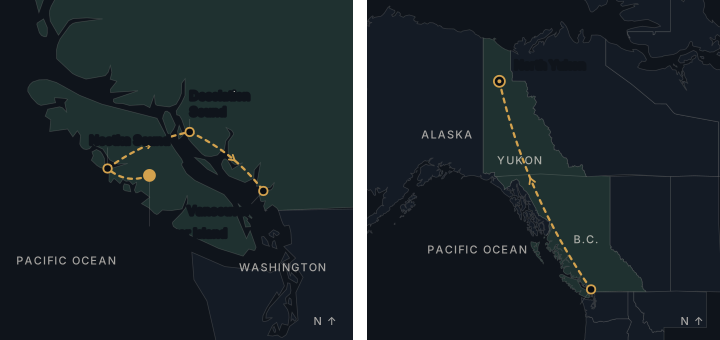
Canada route, from Vancouver Island through Nootka Sound, Desolation Sound and Vancouver to North Yukon.
Readings
  • Braiding SweetgrassRobin Wall Kimmerer · Vancouver Island
  • The Golden SpruceJohn Vaillant · Vancouver Island and the Yukon
  • Decolonizing MethodologiesLinda Tuhiwai Smith · Vancouver Island to Khumbu
  • Principles of TsawalkUmeek / E. Richard Atleo · Vancouver Island and Nootka
  • Seeing Like a StateJames C. Scott · Vancouver and Khumbu
Wilderness quotient
Carbon footprint
310 kg CO2e per student
Full calculation →

Term 1 will take place in 2028. The program will continue to develop before the term begins.

Pelion’s full curriculum is available to view for prospective partners, parents, and students.
Please enter the password to continue.